
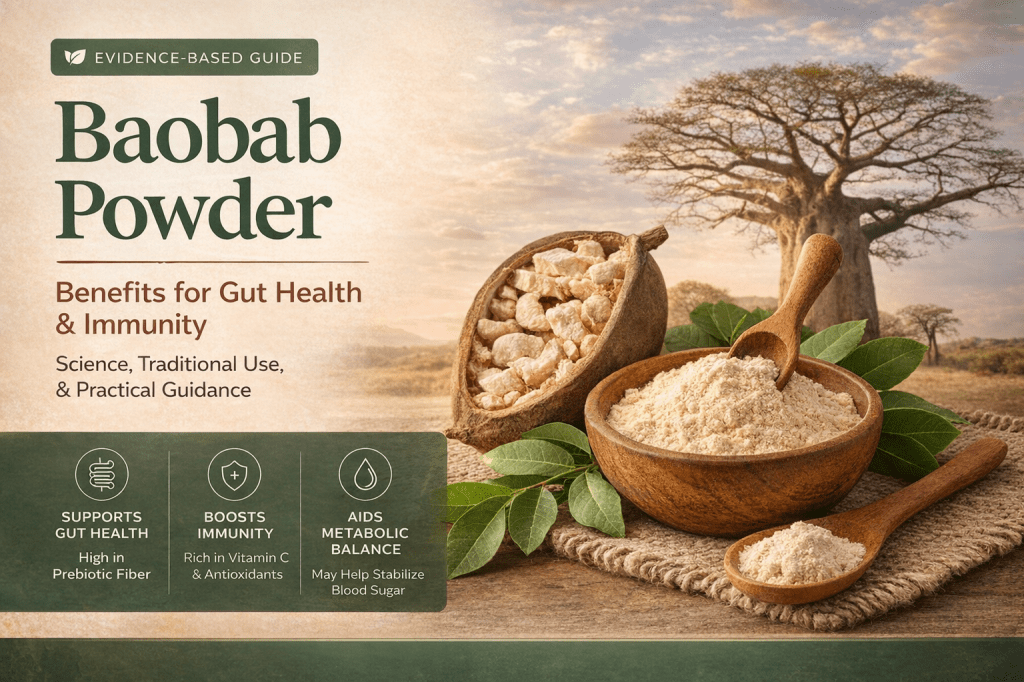
In some of the driest regions of Africa, where access to fresh food and water can be unpredictable, communities have long relied on a single tree for nourishment. The fruit of the Baobab tree has been traditionally mixed with water to create a naturally tangy drink — one that provided hydration, energy, and essential nutrients in challenging conditions.
Today, this same fruit is gaining attention in modern nutrition for its unique combination of fiber, antioxidants, and vitamin C. As interest in evidence-based wellness grows, baobab powder is emerging as a simple, natural way to support gut health, metabolic balance, and overall well-being.
What Is Baobab Powder?

Baobab powder is made from the dried pulp of the baobab fruit, traditionally used in parts of Africa for nutrition and hydration.
It is naturally rich in:
- Vitamin C
- Soluble dietary fiber
- Polyphenols (antioxidants)
Because of this combination, baobab offers a multi-functional approach to nutrition — supporting digestion, energy balance, and immune health.
Where It Is Found & Traditional Use
The baobab tree is native to regions of:
- Sub-Saharan Africa
- Parts of Madagascar
- Some areas of Australia
Often called the “Tree of Life,” it has been an important part of local diets for centuries.
Traditional Uses:
- The fruit pulp was mixed with water to create a natural energy and hydration drink
- Used as a daily nutrition source during hot climates
- Consumed by children and adults for general nourishment
- In some regions, used during periods of food scarcity due to its nutrient density
👉 These traditional practices align with what modern nutrition science now recognizes — baobab as a natural source of electrolytes, fiber, and antioxidants.
How It Works (Mechanism)
1. Supports Gut Health
Baobab has high levels of soluble fiber, which acts as a prebiotic. This helps nourish beneficial gut bacteria and supports a healthier digestive environment.
2. Helps Maintain Stable Energy Levels
The fiber content may slow carbohydrate absorption, which can help reduce sudden spikes and drops in blood sugar levels after meals.
3. Provides Antioxidant Support
With its vitamin C and polyphenol content, baobab may help reduce oxidative stress and support overall immune function.
👉 Together, these effects make baobab a simple way to support internal balance through everyday nutrition.
What Research Shows
Scientific studies have explored baobab’s nutritional and functional effects:
- Coe et al., Nutrition Research (2013)
A human study found that adding baobab extract to food reduced post-meal blood sugar response and increased satiety. - Braca et al., Journal of Ethnopharmacology (2003)
Reported strong antioxidant activity in baobab pulp due to its polyphenol content. - Kamatou et al., Critical Reviews in Food Science and Nutrition (2011)
Highlighted its potential role in gut microbiota support and anti-inflammatory activity.
👉 While more large-scale studies are needed, current findings suggest baobab can play a supportive role in metabolic and digestive health.
Limitations
- Research is still developing, with limited large-scale human trials
- Effects may vary based on individual health and diet
- Product quality depends on sourcing and processing
Baobab is best viewed as a supportive nutritional addition, not a replacement for medical care.
Practical Takeaway
Who May Benefit
- Individuals looking to improve digestion and gut balance
- Those wanting a natural source of vitamin C
- People aiming to support metabolic health through diet
Who Should Be Cautious
- Individuals with sensitive digestion (start with small amounts)
- Those with medical conditions should consult a professional
Recommended Intake
- Typical range: 5–15 grams per day
- Start with smaller amounts and increase gradually
How to Use
- Mix into water or juice
- Add to smoothies
- Combine with yogurt or breakfast bowls
👉 Consistency is key — small daily use is more effective than occasional intake.
Frequently Asked Questions (FAQ)
Is baobab powder good for gut health?
Yes, its soluble fiber content may support beneficial gut bacteria and improve digestion over time.
Does baobab powder support immunity?
It provides vitamin C and antioxidants, which may contribute to immune support.
Can baobab help with blood sugar control?
Some studies suggest it may help reduce post-meal glucose spikes, though more research is needed.
Is baobab better than amla?
Both are rich in vitamin C. Baobab also provides high fiber, which may offer additional digestive benefits.
Can baobab be taken daily?
Yes, when used within recommended amounts, it can be part of a regular diet.
Are there any side effects?
Higher intake may cause mild digestive discomfort due to fiber. Starting with small amounts is recommended.
Final Perspective
Baobab powder offers a unique combination of fiber, antioxidants, and vitamin C that may support gut health and overall wellness. When incorporated into a daily routine, it can be a simple and natural way to enhance nutritional intake.

 Ko-sha
Leave a comment