
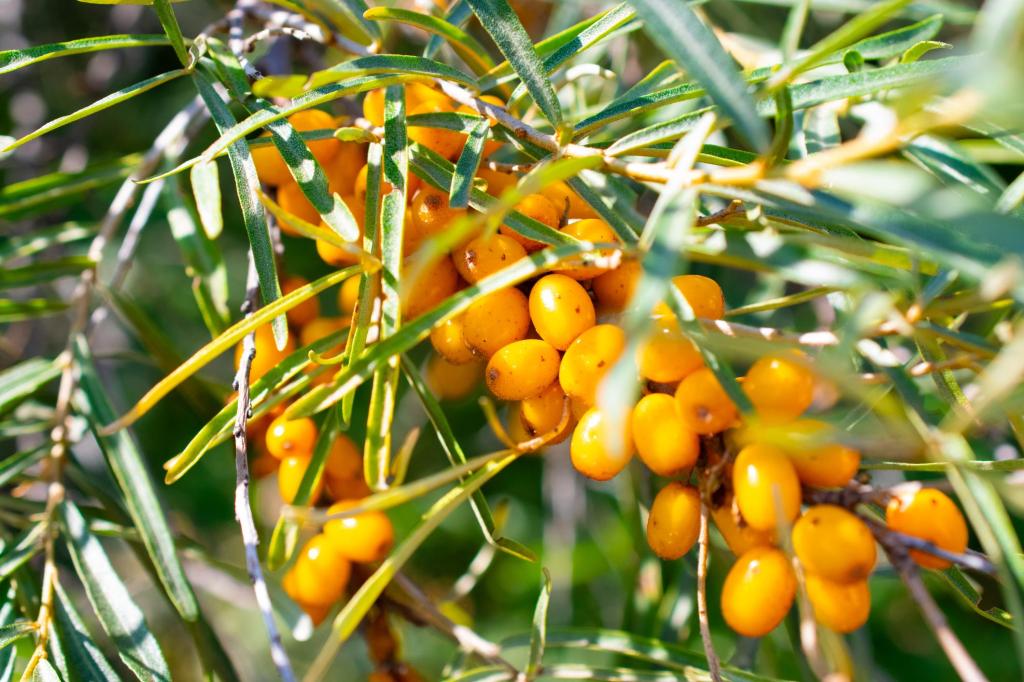
Bright orange, intensely tart, and nutritionally dense — sea buckthorn pulp juice has been called one of the most concentrated antioxidant juices in the plant world.
But is it truly beneficial for metabolic and cardiovascular health — or just another trendy superfood?
Here’s what current human research actually shows.
1. What Sea Buckthorn Pulp Juice Is
Sea buckthorn (Hippophae rhamnoides) is a small orange berry traditionally used in parts of Europe and Asia for vitality and recovery.
The pulp juice comes from the fleshy part of the berry (not the seed oil) and contains:
- Very high vitamin C levels
- Vitamin E
- Carotenoids (beta-carotene, lycopene)
- Polyphenols
- Omega-7 (palmitoleic acid)
Because of this composition, it’s being studied for:
- Metabolic health
- Cardiovascular support
- Inflammatory balance
- Skin hydration
It is not a medicine — but it is a biologically active food.
2. How It Works in the Body
Sea buckthorn pulp juice appears to act through three main pathways:
A. Reducing Oxidative Stress
The combination of vitamin C and carotenoids may help reduce oxidative damage to lipids and cells.
Oxidative stress contributes to:
- Atherosclerosis
- Insulin resistance
- Chronic inflammation
The antioxidant activity is well established chemically — the clinical impact is moderate.
B. Supporting Lipid Balance
Some human trials suggest sea buckthorn may modestly:
- Reduce triglycerides
- Improve LDL oxidation markers
- Support endothelial function
These changes are small but measurable.
Yang et al., Journal of Nutritional Biochemistry (2011)
Important: It does not replace lipid-lowering medication.
C. Influencing Insulin and Inflammation
A controlled human study found that sea buckthorn berry intake improved post-meal insulin response and reduced inflammatory markers.
Larmo et al., European Journal of Clinical Nutrition (2013)
This suggests a possible supportive role in metabolic health — but effects are mild.
3. What Human Research Actually Shows
Here’s the honest summary:
Cardiovascular Markers
✔ Mild improvement in triglycerides
✔ Reduced oxidative stress markers
✔ Possible improvement in endothelial function
Evidence strength: Moderate but limited by small trials.
Metabolic Health
✔ Slight improvement in insulin response
✔ Possible reduction in inflammatory markers
Evidence strength: Preliminary.
Skin Health
Some studies suggest improved hydration and reduced dryness.
Eccleston et al., Journal of Nutritional Science (2002)
Evidence strength: Moderate but small-scale.
4. What It Does NOT Do
Sea buckthorn pulp juice has not been proven to:
- Prevent heart disease
- Reverse diabetes
- Cure metabolic syndrome
- Replace medication
Most trials last only 4–12 weeks and involve small participant groups.
5. Practical Takeaway
Sea buckthorn pulp juice may be useful as:
- A high-antioxidant functional beverage
- A mild metabolic support tool
- A skin-supportive nutritional addition
Who May Benefit
- Individuals with mild metabolic imbalance
- People seeking natural antioxidant sources
- Those interested in cardiovascular preventive nutrition
Who Should Use Caution
- Individuals on blood thinners
- People with low blood pressure
- Those expecting therapeutic-level results
Typical Study Intake
Most research uses:
20–50 ml per day
or standardized berry extract equivalents
There is no officially established therapeutic dose.
6. Frequently Asked Questions
Is sea buckthorn pulp juice good for cholesterol?
Some small studies show modest improvements in triglycerides and LDL oxidation. It is supportive, not therapeutic.
Does it help with diabetes?
It may improve insulin response slightly, but it is not a diabetes treatment.
Is it safe daily?
In food-level amounts, it appears safe. Long-term high-dose data is limited.
What’s the difference between pulp juice and seed oil?
Pulp juice contains higher vitamin C and carotenoids. Seed oil contains more omega-3 and omega-6 fatty acids.
Final Verdict
Sea buckthorn pulp juice is a nutritionally dense, antioxidant-rich beverage with emerging human research suggesting mild benefits for metabolic and cardiovascular markers.
It should be viewed as:
✔ A functional food
✔ A supportive nutraceutical
✘ Not a medical treatment
When used with realistic expectations, it can be a valuable addition to a balanced, evidence-based wellness approach.
 Ko-sha
Leave a comment