
A Clinical Evidence Review
CoQ10 (Coenzyme Q10), particularly its active form ubiquinol, is one of the most researched nutraceuticals in cardiovascular and metabolic health.
But does CoQ10 actually improve heart function, energy levels, or aging outcomes? And who really benefits from supplementation?
This evidence-based review examines what CoQ10 is, how it works, what clinical studies show, and where the limitations lie.
What Is CoQ10?
Coenzyme Q10 (CoQ10) is a fat-soluble compound naturally produced in the body. It is found in high concentrations in energy-demanding organs such as:
- Heart
- Brain
- Liver
- Skeletal muscle
CoQ10 exists in two forms:
- Ubiquinone (oxidized form)
- Ubiquinol (reduced, active antioxidant form)
Both forms are biologically active once absorbed, though ubiquinol may offer better bioavailability in older adults.
CoQ10 levels decline with age and may also decrease in individuals taking statin medications.
How CoQ10 Works (Biological Mechanism)
CoQ10 plays two major roles:
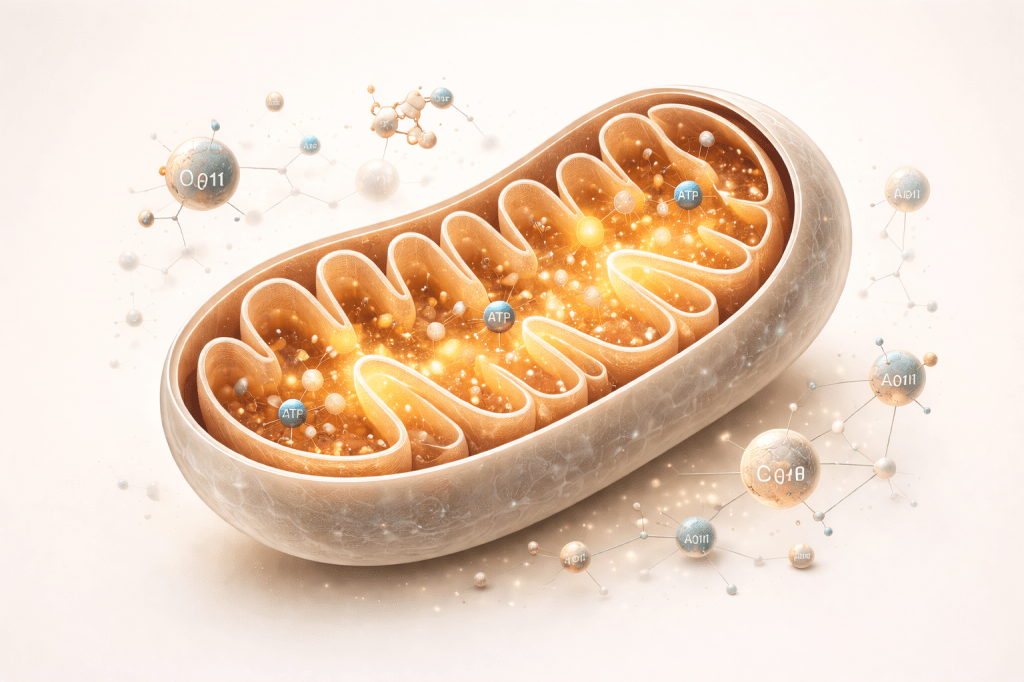
1. Mitochondrial Energy Production
CoQ10 is essential in the electron transport chain, the system inside mitochondria that produces ATP — the body’s cellular energy currency.
Without adequate CoQ10, ATP production efficiency may decline.
2. Antioxidant Protection
In its reduced form (ubiquinol), CoQ10 helps neutralize free radicals and may protect:
- Lipid membranes
- LDL cholesterol
- Mitochondrial DNA
This antioxidant role is one reason it has been studied in cardiovascular and aging research.
What Research Shows
1. Heart Failure
One of the most cited clinical trials is:
Mortensen et al., JACC Heart Failure (2014) – Q-SYMBIO Trial
This randomized, double-blind study found that CoQ10 supplementation:
- Reduced major adverse cardiovascular events
- Reduced cardiovascular mortality
- Improved symptoms in chronic heart failure patients
This trial significantly strengthened CoQ10’s position in cardiology as an adjunct therapy.
2. Cardiovascular Mortality in Elderly
Alehagen et al., International Journal of Cardiology (2013) – KiSel-10 Study
Elderly participants receiving selenium + CoQ10 showed:
- Reduced cardiovascular mortality over long-term follow-up
However, this study evaluated combined supplementation, not CoQ10 alone.
3. Blood Pressure
Rosenfeldt et al., Journal of Human Hypertension (2007)
Ried et al., Cochrane Review (2014)
Meta-analyses suggest:
- Modest reductions in systolic and diastolic blood pressure
- Results vary across studies
The effect appears mild and not universal.
4. Statin-Associated Muscle Symptoms
Statins reduce endogenous CoQ10 production.
Some trials suggest CoQ10 may reduce muscle discomfort in statin users, but findings are inconsistent across studies.
Evidence remains mixed.
5. Migraine Prevention
Several small randomized trials suggest CoQ10 may reduce migraine frequency in some individuals.
Evidence is moderate but not definitive.
Limitations of Current Evidence
While promising, CoQ10 supplementation has limitations:
- Many studies have small sample sizes
- Dosages vary significantly
- Formulations differ
- Effects are not consistent across all populations
- Stronger benefits are seen in people with existing cardiovascular disease, not necessarily in healthy individuals
CoQ10 should not be considered a cure or replacement for medical treatment.
Practical Takeaway
CoQ10 may be beneficial for:
- Adults over 40
- Individuals with heart failure (as adjunct therapy under medical supervision)
- People taking statins experiencing muscle symptoms
- Individuals with migraines
Typical dosage range:
- 100–200 mg daily
- Up to 300 mg in some clinical contexts
Because it is fat-soluble, CoQ10 is best taken with meals containing fat.
Individuals who are pregnant, on blood thinners, or managing chronic illness should consult a healthcare professional before supplementation.
FAQ: CoQ10 (Ubiquinol)
Is CoQ10 safe to take daily?
CoQ10 is generally well tolerated. Mild side effects may include gastrointestinal discomfort or insomnia if taken late in the day.
Is ubiquinol better than ubiquinone?
Ubiquinol may have better absorption in older adults, but both forms ultimately function similarly once absorbed.
Can CoQ10 improve energy levels?
Some individuals report improved energy, especially if deficient. However, results vary and are not universal.
Does CoQ10 lower cholesterol?
CoQ10 does not directly lower LDL cholesterol. It may support cardiovascular health through antioxidant and mitochondrial effects.
Should healthy young adults take CoQ10?
Evidence for benefit in healthy young individuals is limited. Supplementation is more often studied in older adults or those with cardiovascular conditions.
Conclusion
CoQ10 is one of the most researched nutraceuticals in cardiovascular science. It has:
- A strong biological rationale
- Clinical evidence in heart failure
- A favorable safety profile
However:
Its benefits are supportive rather than transformative.
Results vary by population.
Evidence is strongest in individuals with existing cardiovascular risk.
Used thoughtfully and under guidance, CoQ10 may support heart and metabolic health — but it is not a substitute for lifestyle fundamentals such as diet, exercise, and medical care.


 Ko-sha
Leave a comment